How I Helped a Client Get 1.7 Million Google Impressions in Under a Year
Last year, I got a message from a potential client that made my heart sink a little. She'd been in business for five years, had an incredible coaching program, and was barely getting any website traffic. When I pulled up her site in Google Search Console, the numbers were brutal. Five impressions per month. Five. That means Google showed her website to exactly five people over 30 days.
11 months later, I'm looking at her analytics and trying not to cry happy tears. 1.7 million impressions. Not 1,700. Not 17,000. One point seven million times, Google showed her content to someone searching for help. Her organic traffic went from basically zero to over 3k visits per month from Google ONLY. She's getting featured in articles. Other coaches are reaching out to collaborate. And she's booking clients directly from Google searches.
This wasn't some venture-backed company with a massive budget. This was one person with a dream and a willingness to actually do the work. I'm going to walk you through exactly what we did, month by month, so you can apply the same strategy to your own business.
The "Oh No" Moment: Website Auditing a Ghost Town
When I first audited her website, I literally said "oh no" out loud. Not because the site was ugly or broken. It was beautifully designed. Professional branding, clear messaging, nice photos. But from an SEO perspective? It was invisible.
Google had barely indexed some of her pages. She had a services page that wasn't even showing up in search results. More than half of her blogs were not indexed.
She was ranking for exactly one thing: her brand name. If someone typed her exact business name into Google, they'd find her. Cool. Except nobody knew her business name yet because she was brand new to most people.
The site had zero schema markup, which is the code that helps search engines understand what your content is about. No sitemap submitted to Google. No keyword strategy. She was just hoping people would somehow stumble across her through magic or word of mouth.
When I showed her these numbers, she was shocked.
That's the thing most service providers don't realize. Building a website is step one. Making it discoverable is a whole different job.

The SEO Foundation We Built
Before we could create any content, we needed to fix the technical foundation. Think of it like building a house. You can't put up walls if there's no solid ground underneath.
The first thing I did was a complete SEO audit. I looked at every single page, checked loading speeds, mobile optimization, broken links, missing alt text on images, you name it. Found the issues that needed fixing. Some were quick. Others took time.

We mapped out her keyword strategy based on real searches her ideal clients were typing into Google. I spent hours researching what coaches in her niche were ranking for, what questions people were asking, and what gaps existed in the current content out there.
Her services page needed a complete rewrite. She had written it like a brochure, talking about herself and her methods. I rewrote it to match search intent. Language that matched what people were actually searching.
We optimized her homepage with clear, keyword-rich copy that told both humans and search engines exactly what she did and who she helped. Added proper H1 and H2 tags. Included semantic keywords naturally throughout the copy.
Set up Google Search Console and submitted her sitemap. This tells Google, "hey, here's all my content, please index it." Within four weeks, we went from page “who knows where” to page 1. I also created a content calendar for the next six months. We weren't going to wing this. We had a plan.
The Schema Markup That Changed Everything
This part gets a little technical, but stay with me because it matters.
Schema markup is code that gives search engines detailed information about your content. It's like adding labels to everything in your house so a blind person could navigate it. Search engines can't "see" your website the way you do. They read code.
We added the FAQ schema to the pages. This meant that when someone searched a question related to her services, her FAQ could show up directly in search results. We started seeing her content in those "People also ask" boxes within a month.
The author schema told Google who wrote the content and established her as an authority. LocalBusiness schema helped her show up in local searches even though most of her work was online.
The impact was huge. Pages that had schema markup were getting indexed faster and ranking higher than pages without it.
SEO Monthly Strategy That Scaled
Here's where most people mess up with SEO. They do a bunch of work upfront, publish some content, and then stop. SEO isn't a one-time project. It's a system you run consistently.
Every single month, we publish a minimum of four blog posts. Strategic content based on our keyword research and what was actually getting searched.
But here's the twist that made this work so well. She was already creating video content for YouTube and Podcasts. She'd record herself answering client questions, teaching concepts, and sharing tips. Good content.
We started repurposing those videos into optimized blog posts. Then we'd embed the YouTube video or her Spotify Episodes in the blog post.
This Repurpose Strategy Did Two Things
It gave us consistent blog content without her having to write from scratch. And it gave her YouTube videos a better chance of ranking because they were now embedded in optimized blog posts that Google loved.
Each blog post followed a specific structure. Keyword-optimized title. Introduction with a hook and the target keyword in the first paragraph. Clear H2 sections answering specific questions. FAQ schema. Internal links to related content and her services. Call to action.

And now we are optimizing her YouTube videos and Podcast episodes that are also ranking on search engines and getting her more leads.
We weren't just publishing content. We were publishing strategic, interconnected content that built topical authority.
Building Authority and Getting Cited by AI Search Tools
This was the secret weapon that I don't see enough people talking about yet.
ChatGPT and other AI tools are pulling content from websites to answer questions. If your content is well-structured and clearly answers specific questions, you have a chance of being cited by AI.
We optimized every blog post to be AI-friendly. Clear questions as H2 headings. Direct, concise answers. Proper formatting that AI could easily parse and understand.
By month six, we started seeing traffic from AI tool referrals. People were asking ChatGPT questions, getting answers that referenced her blog posts, and clicking through to read more. This was completely organic. We didn't pay for this. We just made sure our content was structured in a way that AI could use it.

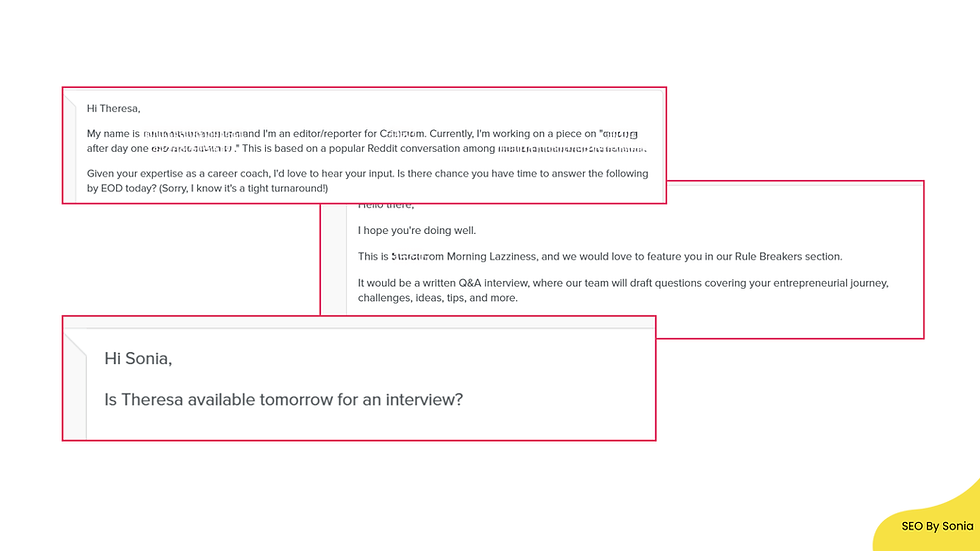
We also focused on getting backlinks and mentions. Through genuine relationship building and creating content worth linking to. Reporters started to reach out to get her input and mentioned her on blogs and comprehensive guides.
Each backlink told Google "other people think this content is valuable." That matters for rankings.
ROI Metrics That Mattered
Let’s talk about the results that actually move the needle. High impression counts are great for the ego, but they don’t pay the bills. Here is how that 1.7M visibility translated into actual business growth.
Dominating the Search Results
We didn't just want "traffic"; we wanted the right traffic. By month 12, she was ranking on page one for dozens of high-intent keywords.
Service Pages: Her core coaching offers moved from unindexed to the #1 spot for her primary target keywords.
Top-of-Funnel Blogs: Several of her educational posts now hold the "Featured Snippet" position, making her the go-to authority in her niche.
The Omnichannel Effect: Because our SEO was so tight, her content started surfacing across ChatGPT, Bing, and even Reddit, creating a massive web of discovery.
The Lead Generation Machine
The most significant shift was the move from "chasing" leads on social media to receiving inbound inquiries on autopilot.
30+ Inbound Calls per Month: We have months where she booked over 30 discovery calls monthly, coming directly from Google, AI search tools, and her repurposed content on YouTube and LinkedIn.
The 1,000+ Webinar Spike: One strategic SEO-driven funnel led to over 1,000 webinar registrations. This wasn't from a one-time ad spend; it was from consistent, organic interest.
Passive Lead Magnet Growth: Her free resources are being downloaded daily by users coming from Google, Reddit, and Yahoo, building her email list while she sleeps.

Revenue and Freedom
This strategy didn’t just grow a website; it scaled a company. After five years of grinding, she finally hit the revenue targets she set when she first opened her doors.
Organic traffic has officially become her #1 lead-generating channel, providing a level of stability she never had when relying on the Instagram algorithm. The best part? She’s no longer a solopreneur doing it all. Because of this growth, she has been able to hire:
A Video Team: To handle the production of the YouTube content that feeds the SEO.
A Sales Assistant: To manage the 30+ monthly calls.
A Virtual Assistant: To handle the day-to-day operations.
Dominating the Neighborhood: Our New Local SEO Frontier
While the 1.7 million global impressions were a massive win, we realized we were leaving money on the table right in her own backyard. A few months ago, we decided to pivot a portion of our energy toward Local SEO.
The goal was simple: make her the "go-to" authority in her specific geographic area, even though she serves clients globally.
Why Local SEO for a Service-Based Business?
Most service providers think that if they work online, they don’t need local search. They’re wrong. Local search intent is incredibly high, when someone searches for a professional "near me," they are usually ready to buy now.
We created and optimized her Google Business Profile and started targeting "city + service" keywords. The results after just 90 days have been incredible:
28 New Booking Page Visits: In one month, 28 people have landed directly on her booking page from local search results alone.
The "Map Pack" Advantage: She is now ranking in the top 3 (the "Map Pack") for her niche in her city.

What This Taught Me About SEO in 2026
SEO isn't dead. It's different. But it's absolutely not dead.
The days of keyword stuffing and sketchy backlink schemes are over. Google is too smart now. What works is genuinely helpful content that answers real questions from real people.
AI is changing search, but that doesn't mean traditional SEO doesn't matter. If anything, it matters more. AI tools pull information from well-optimized content. If your content isn't optimized, AI can't find it to share it.
Consistency beats perfection every time. My client didn't publish perfect blog posts. Some were better than others. But she published consistently, and that consistency built momentum.
Service businesses are sleeping on SEO. Everyone's obsessed with social media because the results feel faster. You post on Instagram, and you get likes within minutes. Feels good. But SEO compounds. That blog post you publish today might not get much traffic this month. But in six months? It could be your top traffic source.
Most service businesses are one good SEO strategy away from being found by their ideal clients. They're not competing with Amazon or huge corporations. They're competing with other small businesses that also don't know what they're doing with SEO. The bar is not that high.
The Mistakes We Made Along the Way
I want to be honest about what didn't work too.
We wasted time on some keywords that looked good in research but turned out to have zero actual search volume. Published blog posts that have never gotten more than 10 views each. Happens. You learn and move on.
We also underestimated how long technical fixes would take. Thought I'd knock out the SEO audit fixes in two weeks. Took over a month because some issues required developer help.
But the biggest lesson? SEO takes time. Some months were discouraging. The numbers barely moved. But then the trend started going up, and it hasn’t stopped.
FAQs: 1.7M SEO Case Study
Was this a big brand?
No. This was a solo service provider with no prior SEO work. Just one person willing to be consistent and strategic.
Was this only blogs?
No. Blogs were a big part of it, but we also optimized her website copy, added schema markup, improved site speed, fixed technical issues, and built backlinks. It was a comprehensive strategy. Just blogging without the technical foundation wouldn't have worked this well.
Can this work for any service business?
If people are searching for what you offer, yes. SEO works for anything people search for. Doesn't work as well for brand new categories where nobody knows to search yet. But most coaches, consultants, and service providers are solving problems people are actively Googling. That's perfect for SEO.

About the Author & SEO Strategist
Sonia Urquilla is an SEO strategist who helps service providers get found without chasing clients online. She works with female coaches, consultants, and local service-based businesses that are tired of relying on referrals and social media alone.
Her work focuses on bridging the gap between how people search and how service providers talk about their work, helping websites turn visibility into leads. You can learn more about her approach here or schedule a strategy call.
Your Turn to Get Found
Look, I'm not going to promise you'll get 1.7 million impressions in 12 months. Your industry might be different. Your competition might be tougher. You might not be as consistent.
But I can promise this: If you're not doing SEO right now, you're leaving money on the table. People are Googling your expertise today. Right now. And they're finding your competitors instead of you.
Start with the basics. Audit your website. Fix the technical issues. Figure out what your ideal clients are actually searching for. Create content that answers their questions. Be consistent.
You don't need to be perfect. You just need to be better than the other people in your space who aren't doing SEO at all.
If you want help building your own SEO strategy, I work with service-based business owners inside my program where we map out your keyword strategy, optimize your site, and create a content plan that actually works. You can find out more at the link in my bio.
Your ideal clients are searching. Make sure they find you.


Comments